A Brief Winter Walk Through Svanholmsparken, Stocksund
Pulled into the large parking lot — the one technically meant for Tranholmen cottage owners, but let’s be honest, the rest of us riff-raff can squat there for a few kronor when the sun isn’t out.
Not in summer though. Then every square inch of grass is colonized by the young, the tan, and the disturbingly symmetrical. Makes you long for the shade and a reliable compression sock.
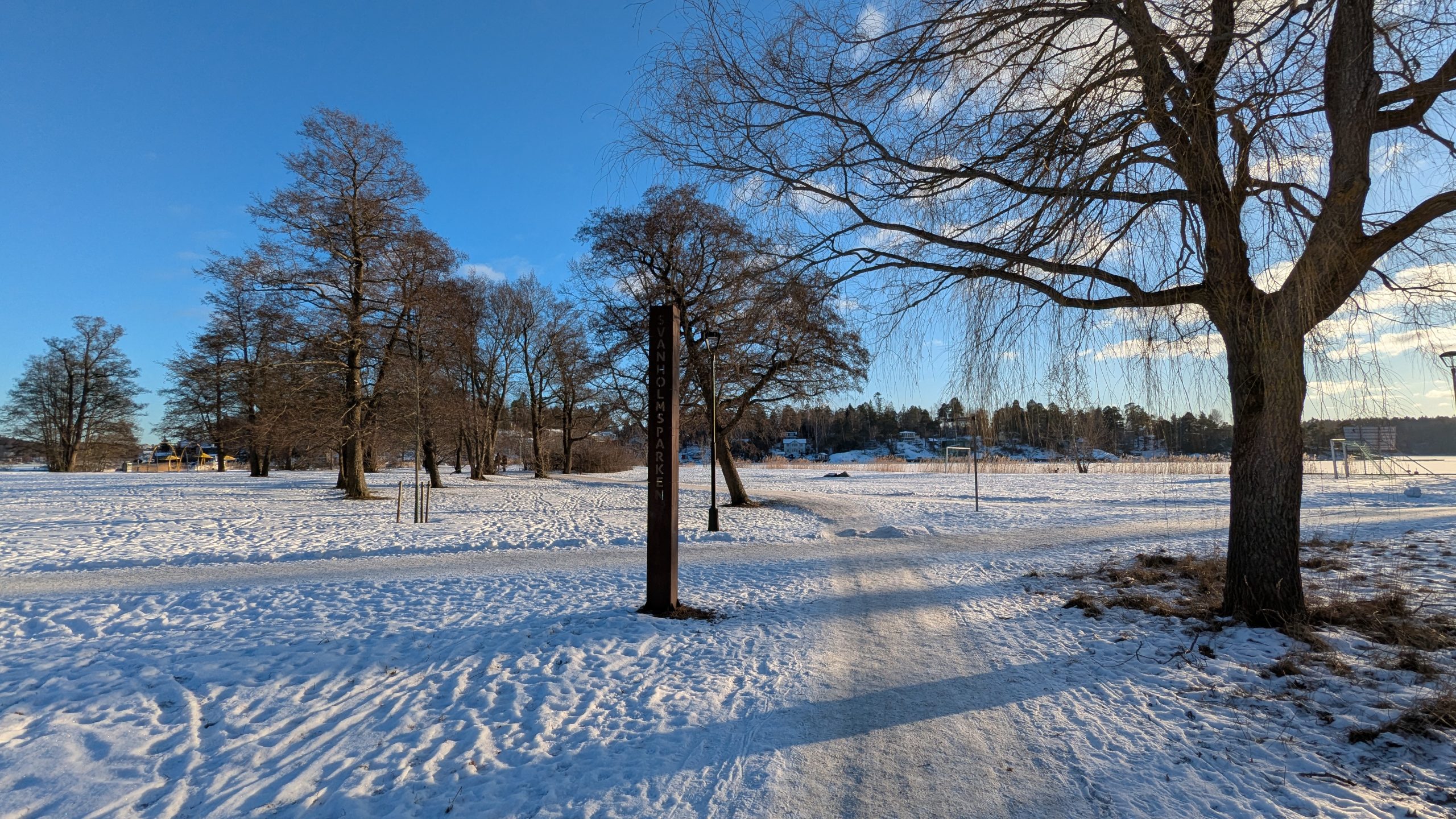
Car secured. We proceed. A health walk, I declare — though some might say “shuffling circuit” is more accurate. It’s a small park, Svanholmsparken, just enough terrain to trick your joints into thinking they’re still in use. The air? That classic Swedish combo: icy slap to the face and just enough humidity to rust your bones.
Who’s in a park at 14:30?
Gymnasium-aged lunatics, obviously. Kicking a ball, sloshing beer in plastic bags, bouncing toward someone’s cottage on Tranholmen with all the grace of caffeinated deer. I nod at them like a man who once too was spry. They ignore me. Fair.
**
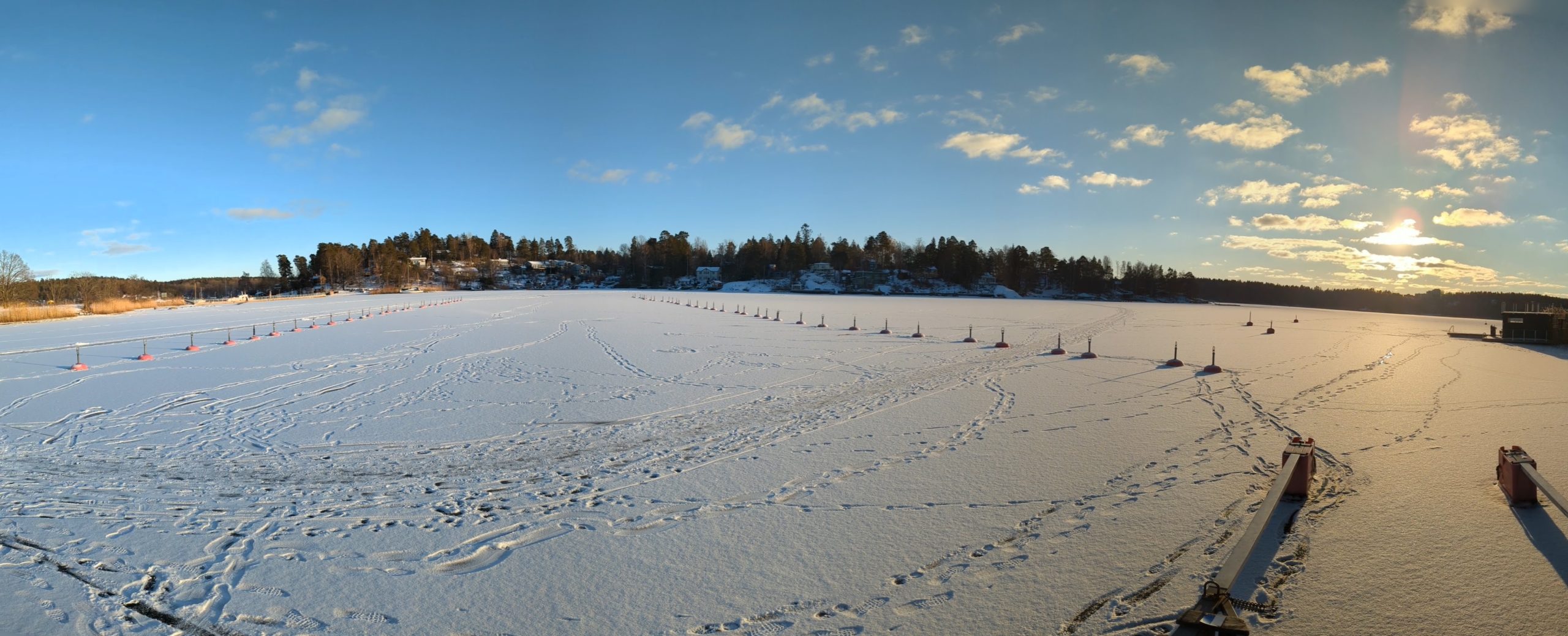
We reach the shoreline. Take a few photos, as one does — proof of vitality, or at least existence. Observe the footprints on the ice, listen to the dramatic creaking beneath the frozen surface. Decide, wisely, not to test the ice. That sort of risk is for people who don’t check their blood pressure voluntarily.
We walk on.
**
And there it is. The bridge to Tranholmen.
Cue the envy.
Black as a pirate’s beard.
So what is Tranholmen?
Ah. Let me deploy my inner Wikipedia:
Tranholmen, Stocksund — a miniature island enclave where people don’t merely reside, they curate a lifestyle, preferably one that screams “my accountant is very good.”
- Type: Elite settlement, in the architectural style of “left is water, right is inheritance tax.”
- Location: Lovingly jammed between the mainland and archipelago — close enough to Stockholm for work, far enough for attitude.
- Access:
- Summer — via ferry, as brief and dignified as a bow.
- Winter — by walking or biking across the ice. Because the rich don’t get cold, they refresh.
- Construction: Private houses and villas. Once summer getaways for the well-heeled, now year-round monuments to “sustainable wealth hoarding.”
- Cars: No cars. It’s all walking, rowing, and subtle displays of socio-economic dominance.
- Atmosphere: Peaceful. Quiet. So quiet, you can almost hear the property values appreciating in real time.
- Social vibe: Prestigious, obviously. If it weren’t, we wouldn’t be whispering its name like it’s Hogwarts.
- History: Originally a summer playground for Stockholm’s elite, then someone thought, “Why leave?” and now they never do. Internet works. Emotionally, still 1897.
Summary:
Not a suburb — a sovereign micro-state, guarded by water, silent resentment, and high-speed broadband.
Now, as for me crossing that bridge in February?
Let’s just say: a camel has a better shot at passing through the eye of a needle than I do crossing that bridge to Tranholmen in this cold.
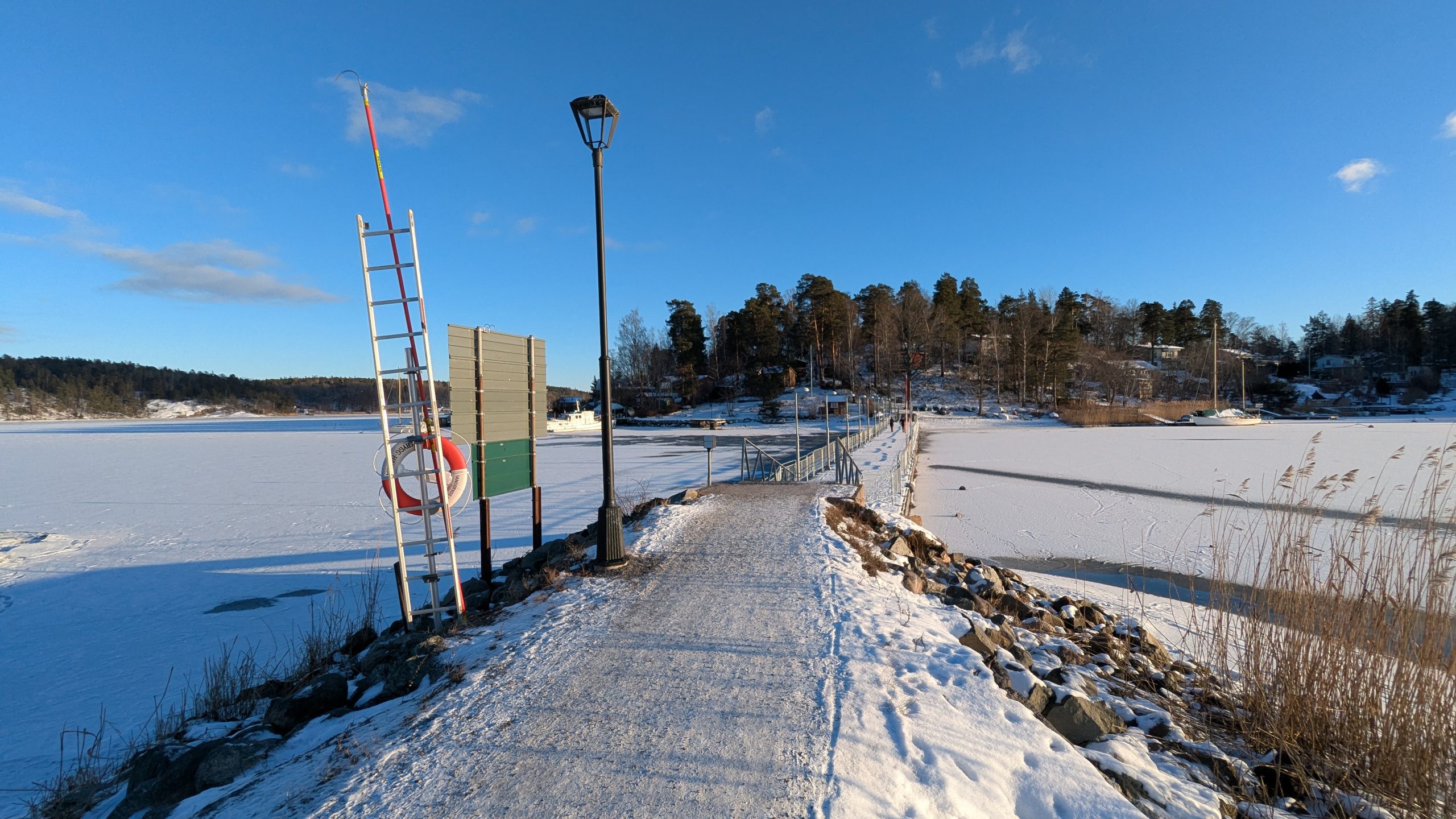
We take a few more photos, mutter something about insulation, and head on.
**
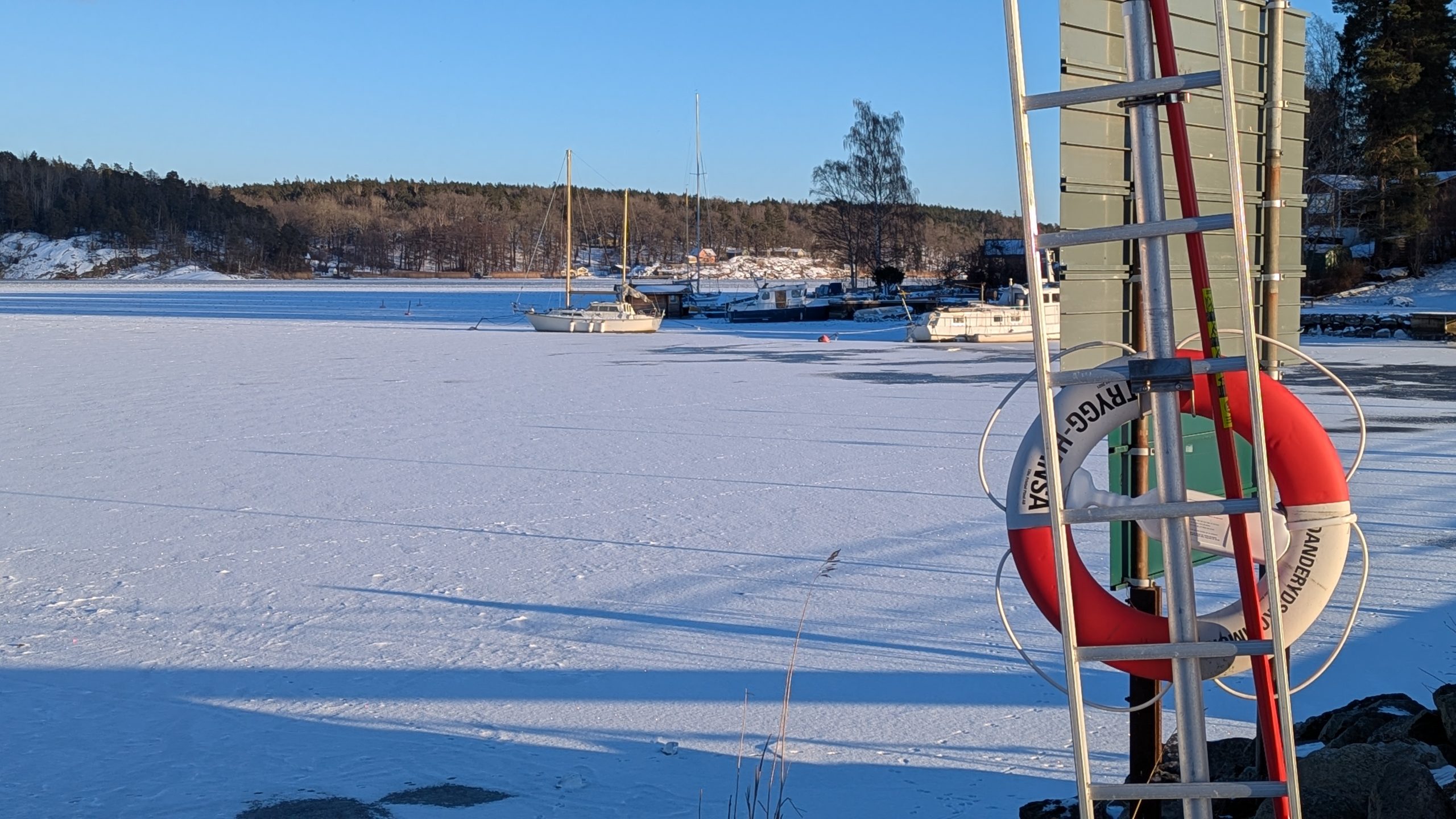
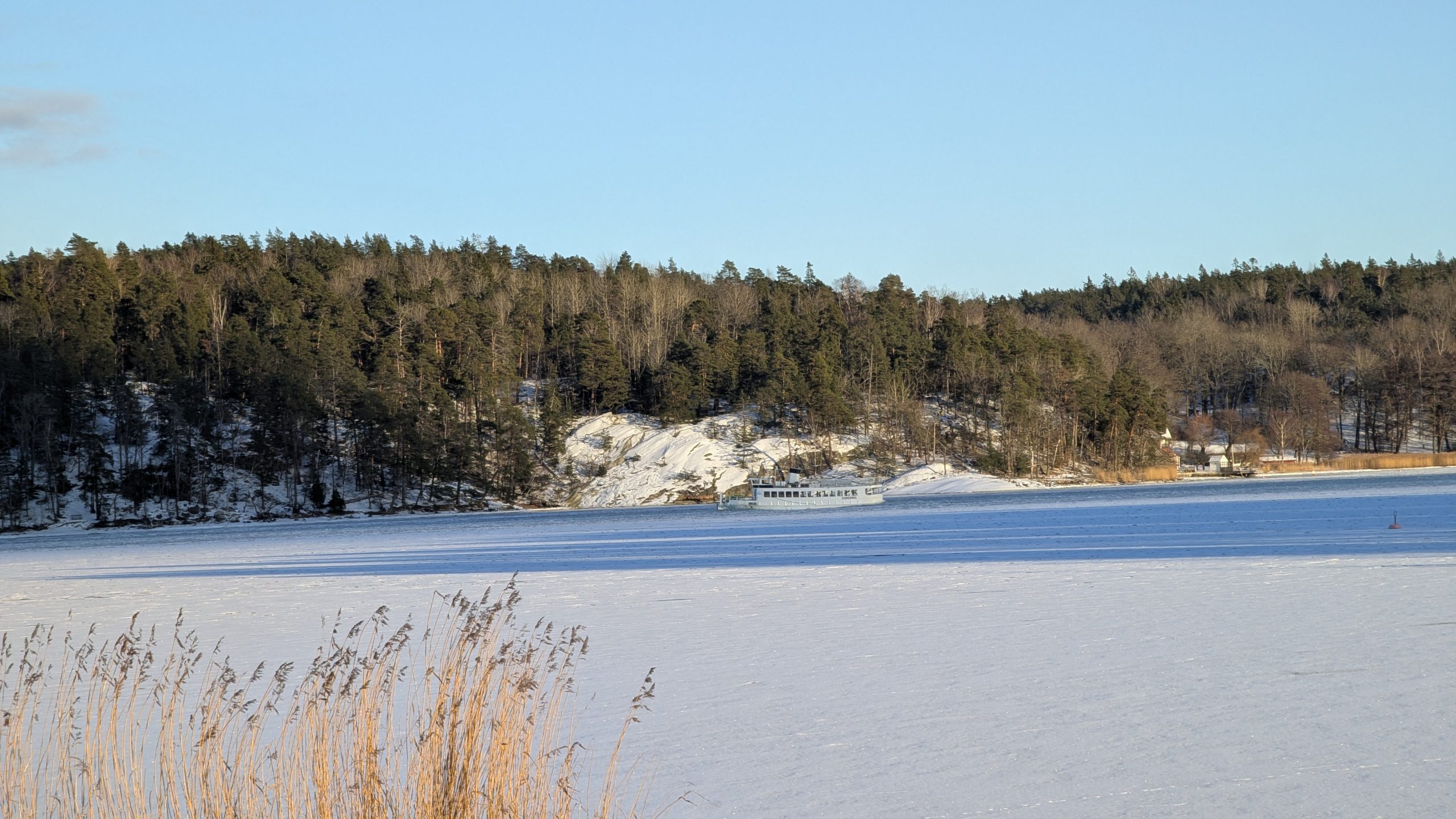
From the shore, we see a glorious old ship, gently groaning between chunks of ice.
I look at it and think: How much must you love history to keep a boat from the time of Charles XII afloat?
But they do. They love it. They maintain it. Possibly with feelings stronger than what they have for their extended family.
**
Sweden is a marvel.
But cold.
I shall now fika.
(It’s like coffee, but with national identity.)